Allergic Rhinitis (2)- Diagnosis, Treatment & Prevention

WEST Vs EAST
- Allergic Rhinitis diagnosis, treatment & prevention
Allergic Rhinitis : Diagnosis
Western Medicine
The diagnosis of allergic rhinitis is based on the patient's history and physical examination during symptomatic periods. While sneezing attacks, nasal discharge, and blockage are common, they are not unique to this condition, and perennial rhinitis symptoms can resemble those of other disorders too. The key feature of allergic rhinitis is that symptoms appear or worsen predictably in response to specific allergens (e.g., a person develops a runny nose or sneezing when exposed to pollen). Therefore, a careful analysis of factors that trigger rhinitis is crucial for diagnosis.
Individuals with non-allergic "vasomotor" rhinitis can also experience similar nasal stuffiness and significant nasal discharge. Unlike allergic rhinitis, it does not respond to identifiable allergens. Instead, symptoms are triggered by airborne irritants, extreme temperatures and humidity, pregnancy, menstrual cycle stages, or emotional factors, resulting in abnormal regulation of the blood vessels in the nasal lining.
Clinical history
A clinical history of symptoms upon exposure is the most reliable indicator of the causative agents in respiratory allergies.
- Variations in symptoms during and after travel can be very significant.
- It's important to note and record the effects of exposure to house dust mites, animals, fur products, feathers, seed derivatives, silk, and similar allergens.
- When casual observations are insufficient, history can be "created" by significantly increasing or reducing specific exposures, such as foods or house pets, for brief periods to observe the results.
- Additionally, the timing and location of symptom occurrence can provide clues to the cause. Specific pollen sensitivities can be identified if symptoms are precisely dated and the season of local airborne pollen prevalence is known. Similarly, recognizing heavy fungus exposures associated with activities like leaf collection, lawn care, gardening, and hiking in tall vegetation can help explain related symptoms.
Skin testing
- Skin tests that produce a wheal-and-flare reaction are useful and widely performed.
- To test immediate reactivity to an allergen, a "prick test" is done by pricking the skin through drops of a water-extract of the allergen.
- Small quantities of extracts can also be injected into the skin using a needle, but this can be hazardous for highly sensitive individuals, so prick tests are usually done first. Only those with negative reactions to the prick test are considered for the injection test.
Few additional tests are available to evaluate respiratory allergies. Initial hopes that a blood test might aid in diagnosis have not been sustained.
Chinese Medicine
For allergic rhinitis, TCM diagnosis is primarily based on the clinical presentations of paindividuals, concluding the disorder as a disharmony pattern. At various stages of the disease, different disharmony patterns will be present, and so individuals with the same disease will be treated differently, depending on the type of disharmony pattern they have. The procedures used in TCM to differentiate between disharmony patterns of allergic rhinitis can be explained as follows:
1.Wind-cold attacking lungs
Due to constitutional weakness, the individual is susceptible to cold and flu or other illnesses. In terms of TCM, this usually means that the individual does not have strong protective qi and this enables exogenous pathogens such as wind and cold evils to invade the nose easily. On examination, the nasal linings are pale and swollen, and with clear watery discharges. The tongue is pale and covered by white fur, the pulse is weak and fine.
2.Lung and spleen deficiencies leading to dampness accumulated
Under-functioning of lungs and spleen can lead to disturbance of body-fluid metabolism, retained fluids or dampness accumulation will be resulted. When the nasal orifices are affected, the nasal linings appear swollen, pale and producing excessive secretions. On examination, the tongue looks bulky, and pink with teeth marks on the edges; the tongue coating is white and greasy, and the pulse is weak and hesitant.
3.Kidney yang depletion failing to support and warm lungs
In TCM, kidney yang is responsible for warming the entire body and assisting in the functioning of all bodily processes. Depletion of kidney yang usually occurs after long-term illness or severe organ damages, which leads to under-functioning of the organs, interrupted the flowing of qi and blood, and lung functioning and the nose are inevitability being affected. On examination, the tongue is pink red and covered with moist white fur, the pulse is weak and thready.
4.Spleen deficiency and phlegm obstruction
TCM believes that the spleen and stomach are very vulnerable to an improper diet, attack of exogenous pathogens, or the influences of other organ deficiencies. Spleen deficiency leads to a decline in qi and blood production, or nutrient essence production; the consequence is that the body will become malnourished, and phlegm can accumulate easily. When nasal orifices can’t get sufficient nutrient supply, the nasal linings will become disorder. On examination, the tongue is pale and covered by thick white greasy fur, the pulse is slippery.
5.Wind-heat attacking lungs
Nasal symptoms are common when exogenous pathogens like wind and heat fight against the protective qi, which usually presents as part of the lung wei-symptom. On examination, the nasal linings are swollen and red, and with clear watery discharges or sticky thick discharges. The tongue is slightly red and covered with thin fur that may be yellow; the pulse is floating and rapid.
Allergic Rhinitis : Treatment
Western Medicine
Allergic rhinitis treatment consists of environmental measures to avoid allergen exposure, drugs, and desensitization. For any disease with an inherent or hereditary component, prevention by avoidance of allergens is usually the most effective means of treatment. Avoidance is not always possible or practical, however, and so medications are needed to control symptoms. In some cases, the immune response itself can be altered by desensitization therapy.
(I) Environmental measures
Avoidance of allergens should be based on a clinical history of symptomatic allergy, rather than solely on a positive skin test. Appropriate measures for individual cases may include:
- Removing household pets to reduce exposure to pet dander.
- Controlling house dust exposure by frequent cleaning and avoiding dust-collecting toys or objects in the patient's bedroom.
- Using air-cleaning devices with high-efficiency particle filters.
- Dehumidifying and repairing leaking pipes to prevent mold growth.
- Avoiding pollen and outdoor molds by staying indoors during high pollen seasons and using air purifiers.
Avoiding pollen or molds is challenging unless the patient can stay in an air-conditioned home or office. To reduce contact, consider:
- Wearing sunglasses.
- Driving with car windows shut.
- Avoiding walks in the countryside, especially in the late afternoon when pollen levels are highest.
- Keeping bedroom windows shut at night.
These measures alone are often insufficient to control symptoms, so additional drug therapy may be needed. Pollen exposure is generally lower at the seaside, where sea breezes keep pollen grains inland. Planning a holiday to a pollen-free area during peak pollen season can also help.
For occupational allergies, efforts should be made to modify the patient's work routine and employ industrial hygiene measures to avoid allergen exposure. If these measures fail, changing the patient's job may be necessary.
(II) Drug Treatment
2. Decongestants
Decongestant drugs are widely used to treat nasal obstruction. They can be taken orally or, more commonly, applied directly as nasal drops or sprays. However, prolonged use can lead to rebound congestion, where tissues become resistant to the medication, resulting in worse congestion than before. Local decongestants may be the only effective treatment for vasomotor rhinitis, but they should be used carefully to avoid rebound nasal obstruction. Typically, these preparations are prescribed for a limited period to open the nasal airways for other treatments, especially topical corticosteroids.
3. Anti-inflammatory drugs(III) Desensitization
Chinese Medicine
According to TCM understanding, allergens are considered exogenous pathogens that can only attack the body when there is a deficiency in healthy energy (low disease resistance) or an imbalance in yin and yang. The saying "When healthy energy is present, pathogens cannot invade" reflects this principle.
TCM methods can benefit allergic rhinitis, especially for those with recurrent episodes, limited effectiveness from Western medicine, or those seeking overall health improvement. It can be achieved through methods such as expelling pathogens, alleviating symptoms, strengthening the lungs, tonifying the spleen, and warming the kidney, TCM provides comprehensive treatment. The long-term results are favorable, with reduced recurrence and alleviation of symptoms.
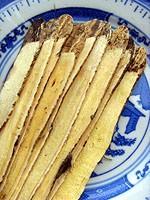
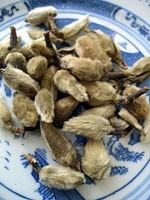
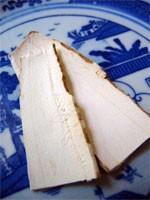
(I) Herbal Prescriptions for Allergic Rhinitis
1.Wind-cold attacking lungs
Therapeutic aim: warm the lungs, consolidate the superficial body, eliminate the wind and unblock the nasal orifices.
Sample prescription:
astragalus root (huang qi)
largehead atractylodes rhizome (bai zhi)
ledebouriella root (fang feng)
Dahurian angelica root (bai zhi)
biond Magnolia flower (xin yi)
Siberian cocklibur fruit (cang er zi)
Acoru (shi chang pu)
Schisandra (wu wi zi)
Chinese date (da zao)
Manchurian wild ginger (xi xin)
liquorice root processed with honey (jiu gan cao)
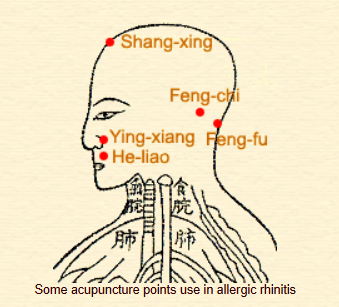
Allergic Rhinitis : Prevention
Western Medicine
Allergic rhinitis has no cure, it can significantly impact on sleep, concentration, working or studying, and even daily function of the individuals. Effective management is essential to reduce the symptoms and improve their quality of life. Individuals with seasonal allergic rhinitis should make efforts to avoid pollen exposure. This can be achieved by avoiding rural areas and staying indoors with windows closed during high pollen seasons. Preventing perennial rhinitis involves avoiding identifiable causative factors as much as possible.
If you are allergic, try to avoid common allergens such as: pollen, dust mites, pet dander, mold and certain foods.
Dust mite Seafood Pet dander Pollen


Chinese Medicine
The way you live, and your daily habits are critical for managing allergic rhinitis or hay fever. A multifaceted approach can reduce exposure to allergens and alleviate symptoms effectively. TCM recommends the following strategies:
Keeping fit
Moderate and regular exercise will help strengthen the body's resistance and reduced recurrence.
Managing environmental factors
- Pay attention to the impact of climatic changes, avoid entering or exiting environments with extreme temperature differences, especially during autumn and winter when temperature fluctuations are great. It's important to add layers of clothing in time to avoid catching a cold and prevent external pathogens from causing illness.
- Try your best to avoid common allergens such as pollen, mites, feathers, fibers, insects, paint or irritating odors.
- Keep the living space clean, regularly air out bedding, reduce indoor dust, and move to a sunny and dry living area. For those who have a high opportunity to contact with allergens, it's advisable to change their work environment as much as possible.
Dietary management
From a TCM perspective, foods and herbs come from the same source, so foods can have similar properties and functions to those of herbs. The properties of food refer to cold, hot, warm and cool; the five flavors of food include pungent (acrid), sweet, sour, bitter, and salty.
- During the attacks of allergic rhinitis, certain foods are recommended to eat more. These include foods that are acrid tasting, foods that promote warmth and sweating, and foods that facilitate the lung's dissemination functions. These foods also help to eliminate exogenous pathogens. Such foods include spring onions, ginger, or fresh coriander.
- In general, individuals should avoid excessive consumption of cold, greasy, and spicy foods. Seafood and other foods known to trigger the disorder should likewise be avoided.
- Foods that tonify are always beneficial for hay fever individuals, such as Chinese date, walnut, Chinese yam, Shiitake mushrooms and lamb should be eaten more frequently. These foods help invigorate qi (vital energy), tonify the spleen, and build up the body's resistance.


Allergic Rhinitis : References
Western Medicine
- Chapel HM, Haeney MR, Misbath A, et al. Essentials of Clinical Immunology, 4th ed. Oxford: Blackwell Science, 1999: 224-5.
- Crompton GK, Haslett C. Diseases of the respiratory system. In: Edwards CRW, Boucher IAD, Haslett C, et al, eds. Davidson's Principles and Practice of Medicine, 17th ed. Edinburgh: Churchill Livingstone, 1995:393.
- Rusznak C, Davies RJ. ABC of allergies. British Medical Journal 1998;316:686-9.
Chinese Medicine
- Chen Guo-feng, ed, Gan's E.N.T. & Stomatology, Jiang Su Science and Technology Publishing Co Ltd, 1999:183.
- Wang min-yu. 315 allergic rhinitis clinical cases treated by infusion for evacuating wind evils and promoting blood circulation. Zhejiang Chinese Medicine Journal 1992;27(7):310.
- Wu Cheng-shan. Exploring allergic rhinitis in treating phlegm and dampness evils. Shan Xi Chinese Medicine 1996;17(12):544-5.
- Zhang En-qin. Clinical Medicines of Traditional Chinese Medicine. Publishing House of Shanghai College of TCM, 1990:7.
Written and Edited By
Western Medicine
Dr Lily Holman MB MSc PhD
Senior Lecturer, Middlesex University, London, UK.
Chinese Medicine
Dang Yi (黨毅) MD PhD
Professor, Beijing University of Chinese Medicine;
Visiting Professor, Middlesex University, London, UK;
Vice Director, Gourmet Food Institute of Health Care and Nutrition of Beijing, PRC.
Translations
Rose Tse, Integrated Chinese Medicine Holdings Ltd.
Editors
Angela Collingwood, MSN Integrated Chinese Medicine Holdings Ltd.
Carol Dyer, BPharm, MRPharms, Integrated Chinese Medicine Holdings Ltd.
Rose Tse, Integrated Chinese Medicine Holdings Ltd.